Neck pain is one of the most common physical complaints in modern life.
As desk work and smartphone use have increased, more and more people each year experience chronic neck stiffness, pain, and discomfort.
Even after visiting an orthopedic clinic and undergoing X-rays or MRI scans, many people are told things like, “There is no abnormality in the bones,” or “Let’s monitor it for a while,” and are simply advised to wait while using painkillers or anti-inflammatory patches.
However, “no abnormal findings on imaging” does not necessarily mean that there is no underlying problem. So how does osteopathy approach this kind of neck pain?
In this article, based on international research and clinical data, we explain in clear terms the principles of osteopathy and its potential benefits for neck pain.
Osteopathy is a form of manual therapy that originated in the United States in the late 19th century. It is based on the idea that the body functions as one interconnected system and naturally has the capacity to regulate and heal itself.
One of the key features of osteopathy is the perspective that “the site of pain is not always the site of the cause.” Rather than focusing only on where symptoms appear, osteopathy assesses the body as a whole.
In Europe, and particularly in France, osteopathy is a regulated profession, and osteopaths are recognized as registered healthcare professionals. It is widely known as a form of care that aims to improve health by evaluating not only muscles and joints, but also the overall balance and function of the nervous, circulatory, and respiratory systems, among others.
For chronic complaints such as neck pain, some people choose to use osteopathy alongside care provided by medical institutions.

From a medical perspective, much of neck pain (cervical pain) is classified as non-specific neck pain.
This refers to persistent pain for which no clear abnormality can be identified through testing, such as a fracture, obvious nerve compression, infection, or tumor.
Neck pain is often not caused by a problem in the bones or intervertebral discs alone.
Rather, it commonly arises from a combination of factors such as:
- tension in the muscles and fascia (for example, stiffness or tightness in the neck)
- slight restrictions in joint mobility
- heightened sensitivity of the nervous system
- psychological factors such as stress or lack of sleep
Because several elements are often involved at the same time, it is frequently difficult to identify a single clear cause of pain.
In osteopathy, however, neck pain is not viewed as an isolated symptom. Instead, it is understood as part of a broader imbalance in the body. For this reason, the assessment is not limited to the neck; other areas such as the head and lower back are also examined.
In osteopathy, the idea is not simply, “If the neck hurts, only the neck should be treated.”
This is because neck pain is often related to broader factors involving the body as a whole, such as:
・Stiffness in the thoracic spine or rib cage
When the chest does not move well, the neck may compensate by moving excessively, which concentrates strain there.
・Movement of the shoulder blades and clavicles
If the shoulder blades do not move properly, the muscles of the neck and shoulders are more likely to remain tense.
・Balance of the pelvis and trunk
When the body’s foundation is unstable, the balance of the entire spine can be disrupted, which may also affect the neck.
・Breathing patterns and the autonomic nervous system
Shallow breathing and stress can increase tension in the neck and shoulders.
Osteopathy is often considered by people who have concerns such as:
- their neck and shoulders always feel heavy because of desk work
- they develop “text neck” by looking down at a smartphone and feel pain at the base of the neck
- severe neck stiffness accompanied by a dull heaviness in the back of the head
- poor posture or having been told they have “straight neck”
- temporary relief from massage, only for symptoms to return quickly
- persistent discomfort even though the hospital found “nothing abnormal”
In these situations, factors outside the neck itself, as well as the way the body is used overall, may also be contributing to the problem.

In overseas randomized controlled trials (RCTs) involving chronic neck pain, participants received three to four osteopathic manual therapy sessions over approximately four to six weeks. The results showed not only a reduction in pain and functional disability, but also improvements in related symptoms such as sleep, fatigue, and depressed mood.
The conclusion of the study stated that osteopathy may help reduce neck pain and functional impairment, has a relatively high safety profile, and represents a cost-effective option. For these reasons, it may be recommended as one component in the management of chronic pain.
Reference: PMC
https://pmc.ncbi.nlm.nih.gov/articles/PMC9054945/
In addition, research investigating osteopathy combined with exercise therapy reported greater improvements in pain reduction and functional disability than exercise therapy alone.
Reference: PubMed
https://pubmed.ncbi.nlm.nih.gov/32507144/
For neck pain, osteopathic care may involve a combination of the following techniques, depending on the individual’s condition.
1. Approach to the cranial bones and temporomandibular joint (TMJ)
The cranial bones and the temporomandibular joint are closely related to the muscles of the neck, the nervous system, and autonomic function. Ongoing jaw clenching, teeth grinding, and postural imbalance may contribute to discomfort in the neck and elsewhere.
In this approach, the practitioner assesses subtle movement in the cranial bones and around the jaw joint, and then makes gentle adjustments. Without using strong force, the aim is to calm excessive nervous system tension and help the whole body relax more easily.
2. Approach to breathing and the diaphragm
Tension in the diaphragm and chest area, which are involved in breathing, can influence autonomic function as well as muscular tension in the neck and shoulders. This approach aims to improve the movement of the trunk and rib cage so that breathing becomes easier, promoting overall relaxation and reducing tension.
This technique is often used for people with long-lasting neck pain or for those who are particularly prone to stress and fatigue.
3. Fascia and soft tissue techniques
Gentle pressure or stimulation is applied to the muscles, fascia (the thin connective tissue surrounding muscles), and other soft tissues in order to relieve stiffness and tension. The muscles around the neck and shoulders tend to become tight through prolonged desk work or long periods of stress, which may impair circulation and nerve function.
Because these techniques do not rely on strong force and instead encourage the body to release naturally, they are generally well tolerated even by people who are sensitive to stronger forms of stimulation.
4. Structural Technique(HVLA), depending on the condition
HVLA is a technique used when joint movement is restricted. A small, quick movement is applied to help restore mobility. It is commonly known as the type of treatment that may sometimes produce a cracking sound, but producing sound is not the goal in itself.
If the practitioner determines during the prior assessment that this technique is not appropriate, it will not be performed unnecessarily.
5. Muscle Energy Technique (MET)
Muscle Energy Technique (MET) is a treatment method that lightly uses the patient’s own muscle activity. By following the practitioner’s instructions and repeating the sequence “gently contract → relax,” imbalanced muscle tension can be reduced and joint mobility can be improved.
Because it makes use of the patient’s own force, it is known as a technique that places relatively little strain on the body.
6. Mobilization to improve joint movement
Mobilization involves moving the joints slowly in order to improve restricted mobility and encourage fluid circulation around the joints. At the same time, it may help promote the elimination of metabolic waste from tissues and support the delivery of nutrients. Because mobilization uses small, controlled movements within a safe range, it is suitable for people who feel uneasy about sudden movements or strong stimulation.

A key feature of osteopathic treatment is that it does not begin by treating the neck immediately. Instead, the practitioner carefully assesses the current condition and proceeds step by step while considering the balance of the entire body.
A typical process is as follows:
- Consultation and examination
The practitioner asks about how the pain appears, daily habits, posture, and medical history.- Whole-body assessment
Not only the neck, but also the cranial area, shoulders, back, pelvis, and breathing are evaluated.- Treatment tailored to the condition
Appropriate techniques are selected and combined in a way that is safe and reasonable for the individual.- Advice for daily life
Simple guidance may be given regarding posture and self-care.
Osteopathy is a form of manual therapy that views neck pain not simply as a problem of the neck itself, but as a reflection of imbalance in the body’s overall function and structure.
Although a certain level of usefulness has been suggested for neck pain, it does not produce the same results in every case. Against this background, osteopathy—which adapts treatment to each person’s symptoms and lifestyle context—can be considered a trusted option for care.
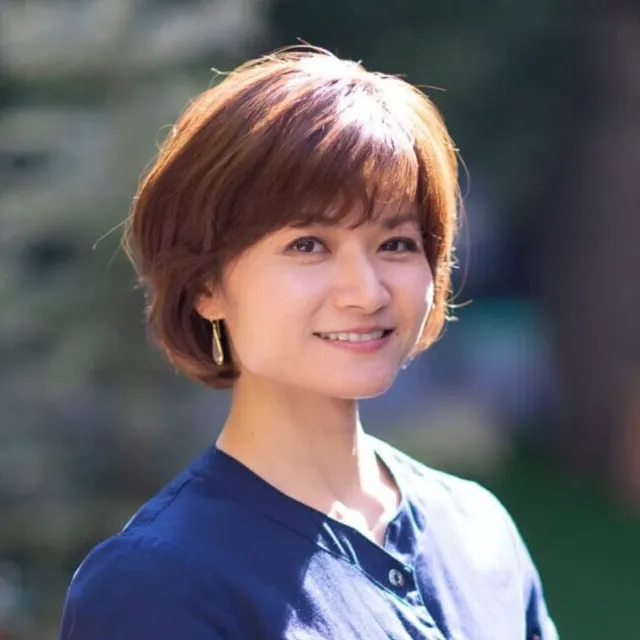
Yoko Kondo, Ostéopathe D.O.
Qualifications
Graduated from CSO Paris (Conservatoire supérieur d’Ostéopathie), a school recognized by the French Ministry of Health, and was awarded the French State Diploma in Osteopathy (D.O.).
Background
Born in Tokyo. Studied for five years at CSO in Paris, acquiring medical theory and osteopathic techniques.
She completed specialized coursework and clinical training in a wide range of fields, including pediatrics, pregnancy, sports medicine, and supportive care for oncology patients.
After practicing as an osteopath in Paris, she is now based in Tokyo, where she provides treatment to patients of many different nationalities.